Cedar-look shake and shingle siding can give a plain gable more character or bring texture to an entire exterior. Choosing a product starts with two separate decisions: the surface texture and the shape of the bottom edge.
A rough shake can have a straight bottom edge. A more refined shingle can have a staggered edge. Comparing those details separately makes it easier to get the look you want for a Northeast Ohio home.
Shake, shingle and scallop describe different details
A rough-split or hand-split look has pronounced grooves and irregular texture intended to resemble split cedar. It can suit a porch, wooded setting or rustic accent. Compare it beside any stone veneer: strong textures in both materials can compete for attention.
A perfection shingle has a more orderly appearance. It can suit a quieter accent where you want the individual shingle pattern without a deeply rugged surface. Sawmill texture adds the appearance of saw marks; “perfection” does not mean every product has a completely smooth face. CertainTeed's texture guide distinguishes these finishes.
Then look at the lower edge. Straight-edge profiles align the bottoms into a regular horizontal line. Staggered-edge profiles vary the bottom line for a less uniform rhythm. Half-rounds, often called scallops, create a repeating curved edge. They are worth considering for a decorative gable or a traditional architectural detail rather than choosing them simply because they are different.
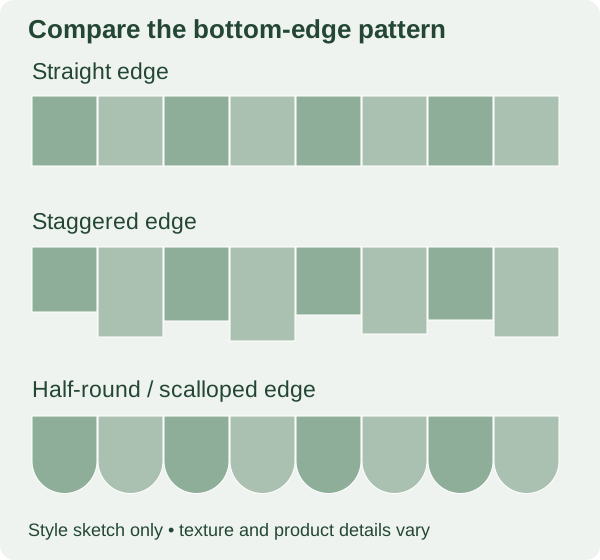
The sketch isolates edge shape. Ask to see the actual texture too: a straight-edge rough-split shake and a straight-edge perfection shingle will still look different.
Real product families to compare
| Product family | Material described by the manufacturer | Examples to consider |
|---|---|---|
| CertainTeed Northwoods | Vinyl | Single 7-inch straight-edge rough-split and Single 9-inch staggered rough-split shake profiles. Useful starting points for comparing a regular edge with a rugged staggered look. |
| CertainTeed Cedar Impressions | Polymer | Perfection and sawmill shingles, plus rough-split shakes. Selected perfection and rough-split profiles offer straight or staggered edges; confirm the exact style rather than assuming every combination exists. |
| Mastic Cedar Discovery | Polypropylene in the technical specification guide | Double 7-inch and Triple 5-inch perfection shingles, Hand-Split Shake and Half-Round. This family includes a curved-edge option as well as shingle and shake looks. |
| Foundry specialty siding, listed by Alside | Vinyl | Shake and shingle options provide another family to sample. Ask for the current profile sheet and matching accessories for the particular style quoted. |
Sources: CertainTeed shake/shingle lineup, Northwoods, Cedar Impressions, Mastic Cedar Discovery and Foundry at Alside.
“Vinyl shake” is a common shopping phrase, but it does not identify the resin in every cedar-look product. Mastic's current linked specification guide identifies Cedar Discovery as polypropylene, even though its product page uses broader vinyl wording. Use the technical sheet for the exact product in your estimate.
These are educational comparisons, subject to current product and color availability. They are not a list of products installed on Solo's featured jobs. Our manufacturer comparison identifies the confirmed Solo product references.
A 7-inch shingle name does not mean a 7-inch-tall panel
Course exposure is the visible height of one shingle row. Manufacturers may also list the combined exposure of a panel containing several rows. The overall panel includes concealed edges, locks and a fastening area.
For example, Mastic's specification guide describes Cedar Discovery Double 7-inch perfection shingles as a two-course profile with 14 inches of exposure, and Triple 5-inch as three courses with 15 inches of exposure. Those measurements are not panel length. The overall piece and the wall area it covers are different measurements.
For a small gable, ask how many complete courses fit between the planned lower trim and the peak. A smaller course exposure can produce more horizontal lines within the same height. Judge that pattern from the street as well as close up. For the broader distinction between length and exposure, see our siding panel-length guide.
Make the gable layout part of the selection
A little planning can make a decorative accent look intentional.
Start with the peak. A centered shingle, gap or half-round can produce a different result, especially on a narrow gable. Mastic's half-round installation guidance specifically addresses centering at the gable peak.
Next, look at the edges beside the roof trim and any window. Ask where the cut pieces will land and whether the chosen panel layout leaves an awkward sliver in a prominent spot. The answer should follow that product's installation requirements.
Finally, choose the transition to the siding below. A trim band may give the accent a clear boundary, but its flashing and drainage detail need to be planned too. A change in texture should come with a complete weather-barrier and flashing approach.
Whole-wall coverage needs a bigger sample
A single panel can look convincing on its own. Several connected panels show the repeated shapes, joints, grain and color variation that you will see across a full wall.
For an accent, compare that sample with the existing lap siding, roof and window trim. For a whole-wall design, step back far enough to judge the overall pattern. If you are combining shakes with board-and-batten siding, decide which texture should draw attention and where the change occurs.
Ask to see the corner treatment as well. A matching corner system and a trim-board corner create different appearances. Confirm the accessory fits the selected panel depth and is available in the intended finish.
Choose the maintenance plan along with the style
Manufactured cedar-look products can avoid the routine staining or repainting associated with natural cedar, but the selected material and finish still need their own care instructions. “Low maintenance” does not mean the trim, joints and drainage details can be ignored.
Compare complete proposals: exact family, profile, material, color, corner treatment, removal and wall preparation, weather barrier, flashing and accessory scope. Confirm whether the quoted product is suitable for the planned accent or full-wall application and what local availability means for the schedule.
For help comparing samples and planning the siding layout for your Northeast Ohio home, request a siding estimate from Solo Home Improvement.